

Disclosure: This article may contain affiliate links, which means we may earn a commission if you purchase through these links — at no extra cost to you. We are a member of the Amazon Services LLC Associates Program and we earn from qualifying purchases. See our Disclosure Policy for more information.
🕊️ Simple Summary
Creating an end-of-life plan doesn’t have to feel overwhelming. Start small—focus on one step at a time, like documenting your legal wishes, medical preferences, or funeral ideas. Each decision you make now becomes a gift of clarity and peace for your loved ones later.
NOTE:
This guide is for general educational purposes only and is not legal or medical advice. Laws and healthcare requirements vary by state, so speak with an attorney or healthcare professional if you need help completing your documents or making decisions about your medical care.
How do I create an End-of-Life Plan without getting overwhelmed?
You’re not alone in wondering where to begin. Most people want to prepare but feel unsure how to start — or worry it will feel too heavy. That’s exactly why we created this guide: to help you move from hesitation to clarity, one simple step at a time.
This guide shows you how to create an end-of-life plan that feels manageable, meaningful, and personal to you.
At Funeral Planning Information, we’ve seen the difference a plan makes. When someone takes the time to record their wishes, families gain calm, direction, and confidence. When there’s no plan, grief often turns into confusion and conflict.
When families don’t have guidance, decisions made in heartbreak can leave lasting emotional strain.
This guide isn’t about finishing everything in one sitting — it’s about easing into the process, one thoughtful choice at a time.
There’s no deadline for care. Start with one thoughtful choice.
Let’s Build Your End-of-Life Plan Together
Most people delay planning because they don’t know where to begin. That’s why this guide exists: to offer a supportive path forward.
Here, you’ll find helpful sections on:
- What to include in your personal plan — without making it complicated
- Legal tools such as wills, advance directives, and powers of attorney
- Healthcare preferences that reflect your values
- Funeral or memorial options that feel true to who you are
- Legacy ideas that preserve meaning, not just documents
- Digital estate planning to safeguard your online life
- Ways to support those you care about emotionally when you’re gone
With each thoughtful choice, you make things simpler and clearer for the people you care about. You’ll avoid family confusion, reduce financial stress, and ensure your voice is respected.
Talking about your wishes and recording them are separate steps. A conversation can help your loved ones understand your values; written instructions and properly completed documents give them something to refer to later.
Let’s change that — one decision at a time.
The Conversation That Sparked Funeral Planning Info
Hi, I’m Matthew. I’ve spent the past several years in the funeral and cemetery profession, sitting with families during some of life’s most emotional and complicated moments. Those experiences taught me what truly helps — and what leaves families struggling when guidance is missing.
And yet, for a long time, I hadn’t had those same conversations with my own parents.
So one day, we started. It wasn’t perfect — there were pauses, questions, and even a few laughs — but step by step, we built a plan that gave us something invaluable: clarity, calm, and connection.
Think of this guide as us sitting together at the table, page by page, talking through the things that matter most. You don’t have to do everything today — simply start where you feel ready, and return when you’re ready for the next step.
Each decision you make today becomes a lasting act of care — one that brings peace and confidence to those you love.
What to Include in an End-of-Life Plan
Think of this plan as your personal guidebook. It doesn’t have to be perfect; it just has to reflect you.
No rule says you have to finish it all in one sitting. Most people work through it one section at a time. Some start with the legal paperwork. Others begin with memorial wishes or letters to loved ones. What matters most is simply starting.
This guide is here to help you take those steps, at your own pace, in the order that feels right. Every decision you make now is a gift to the people you love later.
Need a place to start?
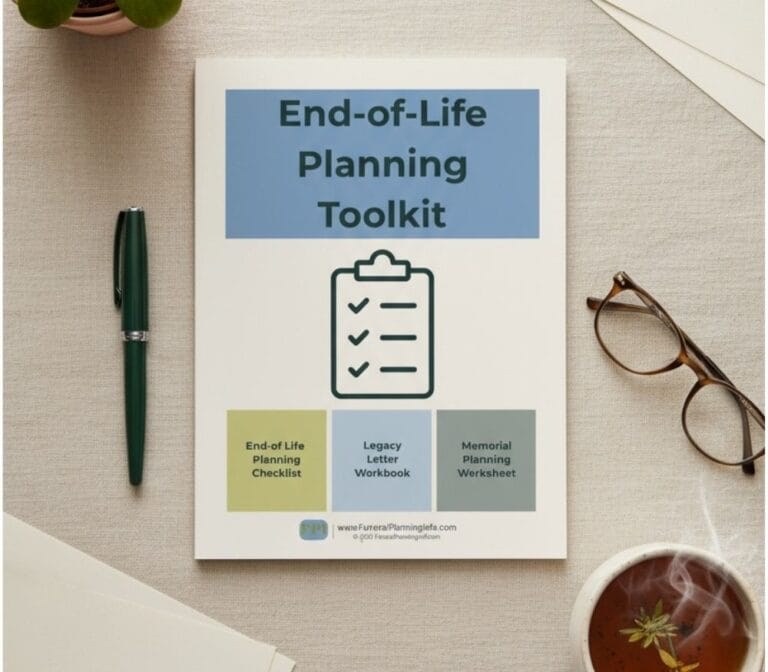
We’ve created a free End-of-Life Planning Toolkit that includes a planning checklist, funeral wishes worksheet, and legacy letter template to help you organize everything in one place.
Download the free End-of-Life Planning Toolkit.

What Legal Documents Do You Need for an End-of-Life Plan?
“Legal paperwork might not feel emotional — but it safeguards your say in what happens when you can’t speak for yourself.”
Getting your legal affairs in order is one of the most powerful steps in end-of-life planning. These documents ensure that your choices, values, and voice are respected — even when you’re no longer able to make decisions yourself.
Essential End-of-Life Legal Documents
- Will or Living Trust — A will designates who receives your assets and names the person responsible for managing your estate. It goes through probate, which is a public court process. A living trust, by contrast, can bypass probate, offer more privacy, and reduce delays and expenses for your family.
Tip: A trust may be a better choice if you own property in multiple states or want to simplify things for your heirs.
- Advance Directives — A living will records medical treatment wishes, while a healthcare power of attorney names a decision-maker. States may use separate or combined forms. For example, would you want life support? Feeding tubes? What are your goals for comfort and symptom relief? Check your state’s forms and signing requirements.
Every state provides its own version of these forms, but the purpose is the same: to ensure your medical choices are honored.
- Power of Attorney (POA) — A Power of Attorney lets someone act on your behalf. Depending on your state, you may need separate forms for financial and healthcare decisions. There are two key types:
- Medical POA — sometimes called a “Healthcare Proxy” or “Healthcare Agent.”This lets you appoint someone to handle healthcare decisions on your behalf.
- Financial POA — Manages finances, bills, and legal matters
Choose someone you trust — and who can remain calm under pressure.
If you’re unsure which documents are right for your situation, see our guide: Advance Directives and Living Wills.

Documenting Your Healthcare Choices
The best time to make medical decisions is before a crisis, when your mind is clear and your values can guide the care you receive.
Your healthcare preferences are about more than medical forms — they’re your way of ensuring that care aligns with your beliefs, priorities, and comfort. Taking time now to outline those choices gives your loved ones and doctors clear direction when it matters most.
Begin by asking yourself:
- Do I want aggressive treatments if recovery is unlikely?
- What does comfort care mean to me?
- Am I open to hospice or palliative support?
Once you’ve reflected on these questions, record your answers in an Advance Directive or Living Will, and share them with the person you’ve chosen as your Healthcare Power of Attorney (also called a proxy or healthcare agent). Having this conversation helps your care team understand your wishes, even when you can’t speak for yourself.
Key Medical Decisions to Consider
- Resuscitation preferences: Would you want CPR if your heart stops?
- Pain relief: What matters most to you about comfort and symptom relief? Discuss the benefits and risks of treatment options with your care team.
- Feeding tubes and life support: Would you want to continue life-sustaining treatments if recovery isn’t likely?
- Hospice or palliative care: How do you want care focused on comfort and dignity to look for you?
Writing these decisions down not only relieves your loved ones of guesswork, it also gives your care team confidence that they’re honoring what matters most to you.
For help understanding these care options, read the National Institute on Aging’s guide to palliative care and hospice.

Planning Your Funeral or Memorial Wishes
“Your memorial choices are more than logistics. They’re reflections of your life, your story, and what you value most.”
Thinking about a funeral or memorial service can feel emotional, but it’s also an act of love. By deciding in advance, you give your family space to grieve without the pressure of last-minute decisions. You’re helping them focus on remembering you, not rushing to organize details during a difficult time.
Here are some decisions to consider as you begin:
Final Disposition Options
- Burial: Traditional or green burial, depending on your values and location
- Cremation: With or without a service; ashes can be scattered, kept, or placed in a memorial item
- Water Cremation, also called alkaline hydrolysis, is an eco-conscious option available in some states.
Alternative Choices
- Donation to science: Contribute to medical research or education, leaving a legacy that helps others.
- Sea burial: Available in select coastal areas, often with specific local guidelines.
Tone and Ceremony Service Options
- Do you prefer a funeral, a memorial service, or a celebration of life?
- Should it be spiritual, solemn, or joyful and informal?
- Would a specific location, such as a beach, home, or place of worship, feel right?
Personal Touches to Consider
- Favorite songs, readings, or poems
- Who you’d like to speak or officiate
- Dress code or symbolic tokens (like wearing your favorite color)
Cost Considerations
- Costs depend on the location and services selected. Compare itemized funeral-home and cemetery quotes, including the items a package leaves out. Our cremation and burial guide explains the main cost factors.
- Making these decisions ahead of time helps your loved ones avoid overspending in moments of grief and gives them peace of mind that your wishes are being followed.
Planning these details isn’t about formality; it’s about easing the weight for those who will miss you most.
For a closer look at service types, personal touches, and cost comparisons, explore our detailed guide: Cremation vs. Burial.

Creating a Meaningful Legacy Project
“Legacy isn’t just what you leave behind. It’s what continues in the hearts of those you love.”
End-of-life planning is more than paperwork — it’s also about preserving the parts of you that words, stories, and memories can carry forward. A legacy project gives you the chance to share your values, your humor, and your love in ways that live on long after you’re gone.
These projects don’t need to be elaborate. They’re simply reflections of who you are and what has mattered most in your life.
Ways to Leave a Meaningful Legacy
- Write a legacy letter (or ethical will): Share your life lessons, memories, and hopes in a personal letter to those you love. It doesn’t need to be perfect — just honest, heartfelt, and real.
- Record a video or audio message: A few simple words — “I love you,” a story from childhood, or a favorite saying — can become a lifelong comfort for your family.
- Create a memory book or digital scrapbook: Gather photos, quotes, recipes, and family stories. Whether printed or digital, this becomes a collection of what made your life unique.
- Pass along something symbolic: A favorite song, a handwritten note, a small heirloom, or a tree planted in your honor can all speak volumes about your spirit and values.
- Give through generosity: Support a cause, scholarship, or local program that aligns with your passions. Acts of giving can become part of your story, too.
Legacy work doesn’t have to wait for the future. It can be one of the most fulfilling things you do right now. It allows you to connect deeply with the people and values that define your life.
Your story is already unfolding. This is your opportunity to shape how it will be remembered with kindness, connection, and intention.
Start with one small legacy project: record a favorite memory, label a family photograph, or write a letter to someone you love.

Planning Your Digital Legacy
“Your digital life doesn’t disappear — it lives on unless you plan for it.”
Your digital life deserves thoughtful planning, too. From securely sharing passwords after death to memorializing social media profiles, digital legacy planning ensures your online presence is managed with care. Start by listing what happens to digital accounts after death — from email to photo storage — and assign a digital executor.
Here’s how to protect and preserve your digital legacy:
Key Accounts to Organize
- Email, online banking, cloud storage
- Streaming services, bill pay platforms, and shopping accounts
- Social media like Facebook, Instagram, and Twitter
Steps to Take
- List and secure key digital accounts — Record logins for your email, online banking, cloud storage, streaming services, bill pay platforms, and shopping accounts. Use a password manager like LastPass or 1Password to store them securely and share access with a trusted person.
- Assign a digital executor — Choose someone you trust to manage your digital presence after death. You can name them in your will or through a separate document. Make sure they know where to find your logins and understand your wishes.
- Set up memorialization or account preferences — Facebook offers a legacy contact option. Check each social platform’s current rules for memorialization or removal rather than assuming they work alike. Google’s Inactive Account Manager lets you choose contacts, selected data to share, and an optional deletion plan.
- Back up and share access to digital heirlooms — Think about meaningful digital items like family photos, videos, audio messages, and journals. Save them in a secure location, and ensure your loved ones know how to access them when the time comes.
Digital heirlooms matter too. Think about family photos, videos, and voice notes stored in the cloud.
📌 Quick Tip: Back up meaningful digital files and make sure someone knows how to access them.
Your digital life is part of your story. A few simple steps now can help your loved ones avoid confusion and preserve the memories that matter most.
For a step-by-step approach to protecting your online accounts and memories, see our guide: Digital Afterlife Planning.

Supporting Loved Ones Emotionally
“Even after you’re gone, your words and love can still offer strength when it’s needed most.”
Grief is unpredictable — it can look like tears, silence, laughter, or simply feeling lost. One of the most compassionate things you can do is to leave behind guidance, comfort, or small reminders that help your loved ones navigate those first difficult days.
These gestures don’t need to be grand. They’re quiet, deeply human ways to keep showing care, even when you’re no longer there to say the words yourself.
Ways to Provide Emotional Support
- Write letters of reassurance: A few heartfelt sentences — “I love you,” “I trust you,” or “You’ll be okay” — can become anchors for those who miss you most.
- Leave behind resources for healing: Include names of grief counselors, support groups, or books that brought you comfort. A small journal or reflection guide can help loved ones find their own path through loss.
- Offer emotional permission: Encourage your family to laugh again, to celebrate your life, and to release any guilt about moving forward.
- Create a remembrance ritual: Suggest simple acts that bring connection and peace — lighting a candle, cooking a favorite meal, visiting a place that holds memories, or playing a song that makes them smile.
- Share words of gratitude: Express thanks for the relationships that shaped your life. A note of appreciation can become one of the most healing gifts you leave behind.
These expressions of love help shape how your family grieves with gentleness, courage, and comfort.
Even when you can’t be physically present, your voice, guidance, and kindness can still walk beside them.
For more ideas and compassionate insights on helping loved ones through loss, visit our guide: Grief 101 — Understanding Grief.

How to Start an End-of-Life Plan Without Feeling Overwhelmed
End-of-life planning isn’t just for the elderly or the terminally ill. Accidents, illness, and unexpected loss can happen to anyone at any age.
Creating an end-of-life plan doesn’t mean you’re giving up; it means you’re showing care. Whether you’re just beginning with a simple checklist or outlining your full advance care planning guide, every small step builds peace of mind for your family and prevents financial and emotional stress after death.
Even if you start small, a simple plan is better than none. Your future self and your family will thank you for the peace of mind.
Not sure where to begin? Download the Free End-of-Life Planning Toolkit to take the first step, whether filling out a checklist, writing a legacy letter, or just thinking through what matters most to you.

Talking About Your End-of-Life Plan
“The most important part of an end-of-life plan is making sure the people you love know it exists.”
Starting the conversation about your wishes can feel delicate — but it doesn’t have to be uncomfortable. With the right approach, these talks can bring relief, connection, and even unexpected moments of closeness.
Once you’ve begun your plan, sharing it with the right people turns it from a private document into something that truly serves its purpose. Your loved ones don’t need a formal meeting or emotional speech — just openness, honesty, and reassurance that this is an act of care.
As someone who’s worked with hundreds of families through these conversations, I’ve seen how much lighter things feel once the plan is shared. The moment your loved ones understand your wishes, the fear of “getting it wrong” disappears, and peace takes its place.
Simple, Loving Ways to Start the Conversation
- Begin with care, not fear: Try something gentle like, “Can we talk about something important, just in case?” It opens the door without pressure.
- Frame it as a gift: Explain that you’re making things easier for them, not harder. This isn’t about endings — it’s about peace of mind.
- Use your materials as guides: Show them your End-of-Life Planning Toolkit or Legacy Letter. Having something tangible helps ground the discussion.
- Invite participation: Ask for their input on certain details — it transforms the process from a monologue into a shared experience.
- Keep it honest, not perfect: Not everything needs an answer today. Even saying, “I’ve been thinking about this and wanted to share,” is enough to begin
Each conversation you start today becomes a bridge of comfort tomorrow — a way for your loved ones to understand your wishes and feel confident honoring them.
If you’d like gentle prompts to help start the dialogue, visit our companion guide: Talking About Death.
Key Takeaways
This article covers a lot, and it is okay if not everything landed at once. These key takeaways are here to gently reinforce what matters most and to remind you that creating an end-of-life plan is not about doing everything perfectly. It is about starting with care.
Why Starting Your End-of-Life Plan Today Is a Gift to Your Loved Ones
“Creating an end-of-life plan isn’t about endings. It’s about giving your loved ones clarity, comfort, and peace long before they need it.”
Creating an end-of-life plan is not about focusing on loss or final moments. It is about caring for the people you love long before they ever need to make difficult decisions on your behalf.
When your wishes are written down, your loved ones are not left guessing. They do not have to wonder what you would have wanted or worry about whether they made the right choices. Clarity replaces uncertainty, offering comfort during an already emotional time.
Even small steps make a difference. A few notes, a conversation, or a partially completed plan can ease the burden on those you love. You do not need to have everything decided to begin. What matters most is that your intentions are known and your values are honored.

Next Steps in Creating an End-of-Life Plan
You do not need to complete your entire end-of-life plan all at once. For most people, planning happens gradually in small, manageable steps. What matters is beginning in a way that feels right for you.
Some people start with legal considerations. Others begin by thinking through medical preferences or writing down personal wishes. There is no correct order. One thoughtful decision, written down and shared, can make a meaningful difference for the people you love.
To help you take that first step, we have created a free toolkit designed to make end-of-life planning feel clearer and less overwhelming.
The End-of-Life Planning Toolkit includes:
- End-of-Life Planning Checklist
A simple way to organize important decisions at your own pace. - Legacy Letter Template
A space to share your values, memories, and words of love. - Memorial Wishes Worksheet
Guidance for outlining how you would like to be remembered and celebrated.
➡️ Download the End-of-Life Planning Toolkit
Take one gentle step today toward clarity and peace for the people you love.
If you would like continued guidance as you move forward, we also offer a monthly newsletter focused on end-of-life planning, thoughtful reminders, and steady encouragement.
➡️ Join the Funeral Planning Info Newsletter
Receive calm, supportive guidance delivered monthly, so you can continue planning at a pace that feels right for you.
A Final Word of Care
If this feels like a lot, that’s okay. End-of-life planning is not meant to be completed in one sitting or even in one season of life.
What matters most is that you have begun to think about what you value and how you want to care for the people you love. Even small steps create clarity, and clarity can bring comfort when it is needed most.
Whenever you are ready to continue, this space will still be here for you.
Get Your Free
End-of-Life Planning Toolkit!
This simple, powerful toolkit will help you start conversations, record your wishes, and take control of one of life’s most difficult topics—with compassion and clarity.
✅ Make your wishes clear and spare your family confusion
✅ Leave behind messages that bring peace and connection
✅ Handle details now—so others don’t have to later
Everything inside is reviewed for clarity and emotional safety, so you can trust each step you take.
Frequently Asked Questions
How do I start an end-of-life plan if I feel overwhelmed?
An end-of-life plan includes legal documents such as a will, trust, and advance directive; medical care preferences; funeral or memorial wishes; digital legacy details; and personal legacy projects.
The goal is to give your loved ones clear guidance when you’re no longer able to speak for yourself, covering both practical and emotional decisions.
Do I need a lawyer to make an end-of-life plan?
You don’t always need a lawyer to create an end-of-life plan. Many key documents, like advance directives and power of attorney forms, are available through your state’s health department.
However, if you have a complex estate or want to set up a trust, it’s a good idea to consult an attorney to ensure your legal decisions are clear and enforceable.
When is the best age to create an end-of-life plan?
You should review your end-of-life plan at least once a year and after any major life change, such as marriage, divorce, moving to another state, or the birth of a child.
Keeping your plan current ensures your wishes reflect your present situation and remain legally valid.
Where should I store my end-of-life planning documents?
Store your documents in a safe but accessible place, such as a home safe, secure cloud storage, or a clearly labeled folder in your home. Make sure your healthcare proxy, power of attorney, and digital executor know where to find them and how to access them when needed.
How do I talk to my family about end-of-life planning?
Start gently. You might say, “Can we talk about something important, just in case?” Focus on how your plan is meant to help them during a difficult time, not burden them.
Sharing your checklist or legacy letter can make the conversation feel more guided and less intimidating.
Is end-of-life planning the same as estate planning?
No. While the two are closely related, they are not the same thing.
Estate planning focuses primarily on what happens to your assets after death. This typically includes documents such as wills, trusts, beneficiary designations, and powers of attorney.
End-of-life planning is broader. It includes estate planning, but also covers medical care preferences, advance directives, funeral and memorial wishes, important personal information, digital accounts, and conversations with loved ones about your wishes.
Think of estate planning as one part of an end-of-life plan. A complete end-of-life plan helps your family manage not only your finances and legal affairs, but also the practical and emotional decisions that arise during a difficult time.
